Fire Warden Duties in an Irish Workplace

A fire warden helps turn an employer's emergency plan into a response people can follow. The role varies by building: a small office may have one nominated person, while a larger or complex premises may need several people covering zones and shifts. The employer remains responsible for fire precautions, emergency procedures and training. A warden supports those arrangements; they should not be expected to take personal risks to compensate for a weak plan.
Understand the workplace plan first
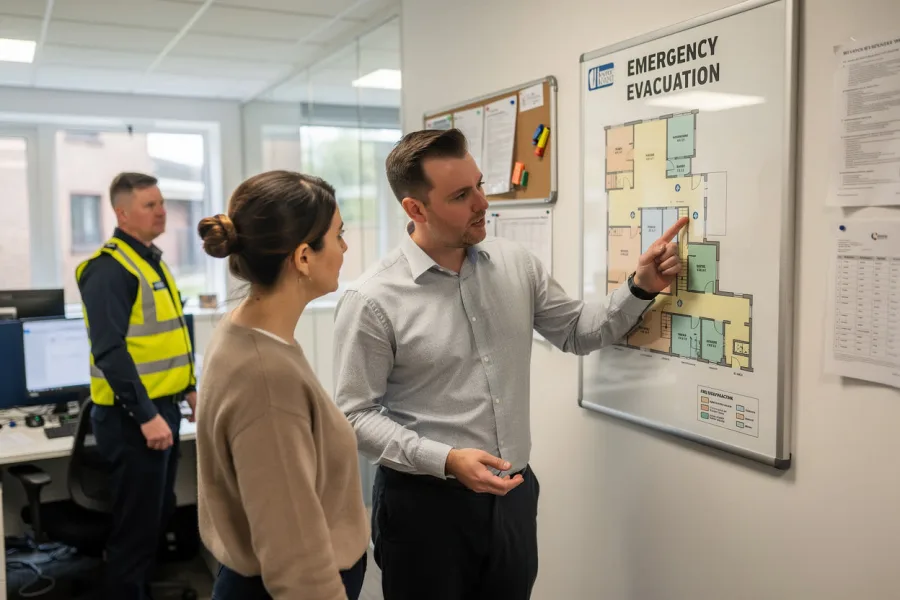
Ireland's Safety, Health and Welfare at Work Act 2005 requires employers to prepare and revise adequate emergency plans and procedures, including measures for fire fighting and evacuation. The HSA's fire guidance also stresses clear escape routes, warning arrangements and training. A fire warden should know the building's alarm, escape routes, assembly point, fire doors and the people who may need assistance.
Local details matter. A stairwell may be unusable during maintenance; a night shift may have fewer staff; visitors may not know the exits. The warden needs a way to report changes and a manager who acts on them. An online course can explain principles, but the warden must walk their own area and understand the current plan.
Everyday checks and prevention
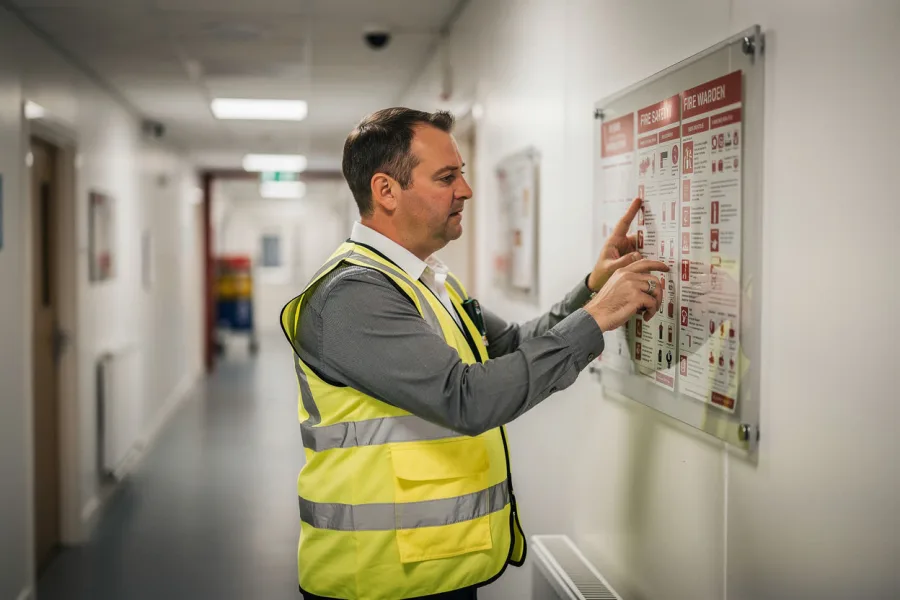
Routine work may include checking that escape routes and final exits are clear, fire doors are not wedged open and combustible material is not building up where it should not. The warden may report missing signs, damaged equipment or a blocked extinguisher. They should follow the site's inspection schedule and report faults to the person responsible; specialist servicing belongs to competent providers.
Prevention also depends on colleagues. A friendly reminder about an obstructed corridor may solve an immediate problem, but recurring obstructions need a change to storage or work practice. The warden should record the issue and escalate it. Their role is strongest when the employer gives them authority and time to raise problems before an alarm sounds.
During an evacuation
When the alarm sounds, a warden follows the local procedure: alert others in the assigned area, direct people toward safe exits, help with the agreed arrangements for anyone needing assistance and pass information to the incident lead. They may check areas only where the plan says to do so and it is safe. They should never enter smoke, search hazardous spaces or delay their own escape to complete a headcount.
At the assembly point, the warden can report what they know: which area was checked, where someone may remain, or whether a route was blocked. Information should be passed to the person coordinating the response and then to emergency services. Do not re enter a building until the authorised person says it is safe. A warden's calm communication often helps more than dramatic action.
Firefighting has strict limits
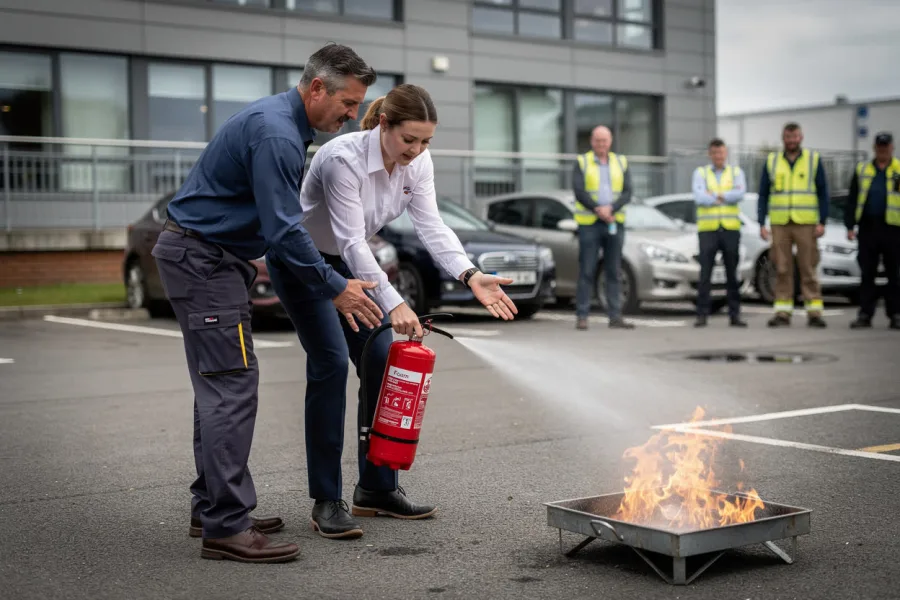
Some workplace plans allow trained staff to use an appropriate extinguisher on a very small fire, but only when they have a clear escape route and can do so without danger. Evacuation and calling for help take priority. The HSA says firefighting equipment should be available for employees to use without exposing themselves to danger. A fire warden course does not make someone a firefighter, and no worker should feel obliged to tackle a fire.
If extinguishers are part of the workplace plan, training should explain fire types, selection and when to withdraw. The Fire Extinguisher course can support that awareness. The employer should still assess whether practical instruction is needed for the people expected to use equipment.
Drills and follow up
Drills reveal whether the plan works. A warden can help explain their zone, note blocked routes or confusion, and pass feedback to the employer. A drill is also a chance to check cover across shifts and whether staff know what to do when the nominated warden is absent. Record observations and assign actions rather than repeating the same drill without improvement.
After any real alarm or drill, review what happened. Did everyone hear the warning? Could visitors find the exit? Did the assembly process provide reliable information? Update the emergency plan and brief workers when the answers change. The safety statement and fire risk assessment should reflect the premises as they are used now.
Training a warden for the actual role
The Fire Warden course provides online learning on prevention, emergency procedures and responsibilities. It can give a new warden a shared starting point. Pair it with a walk through of the building, a briefing on the local emergency plan and supervised participation in a drill. If your premises has complex evacuation needs, seek suitable specialist advice for those arrangements.
Keep a record of who covers each area and shift, the training completed and the date of the last local briefing. Review the roster after staff changes. The practical test is whether a warden can explain what they would do in this building today, including when they should leave and pass information to emergency services.
Cover visitors and people who need assistance
Evacuation planning must account for everyone at the workplace, not only permanent employees. A visitor may not know the alarm sound or assembly point. A worker with limited mobility may need a personal arrangement that works for their actual location and shift. The warden should know the agreed procedure and who coordinates assistance, without assuming they can improvise a lift or carry during an emergency.
Reception and contractors should understand how visitor information reaches the person coordinating evacuation. Test the handover during a drill. If a plan depends on one named person being present every day, it needs a backup. Review these arrangements confidentially and with the people affected so they are practical and respectful.