
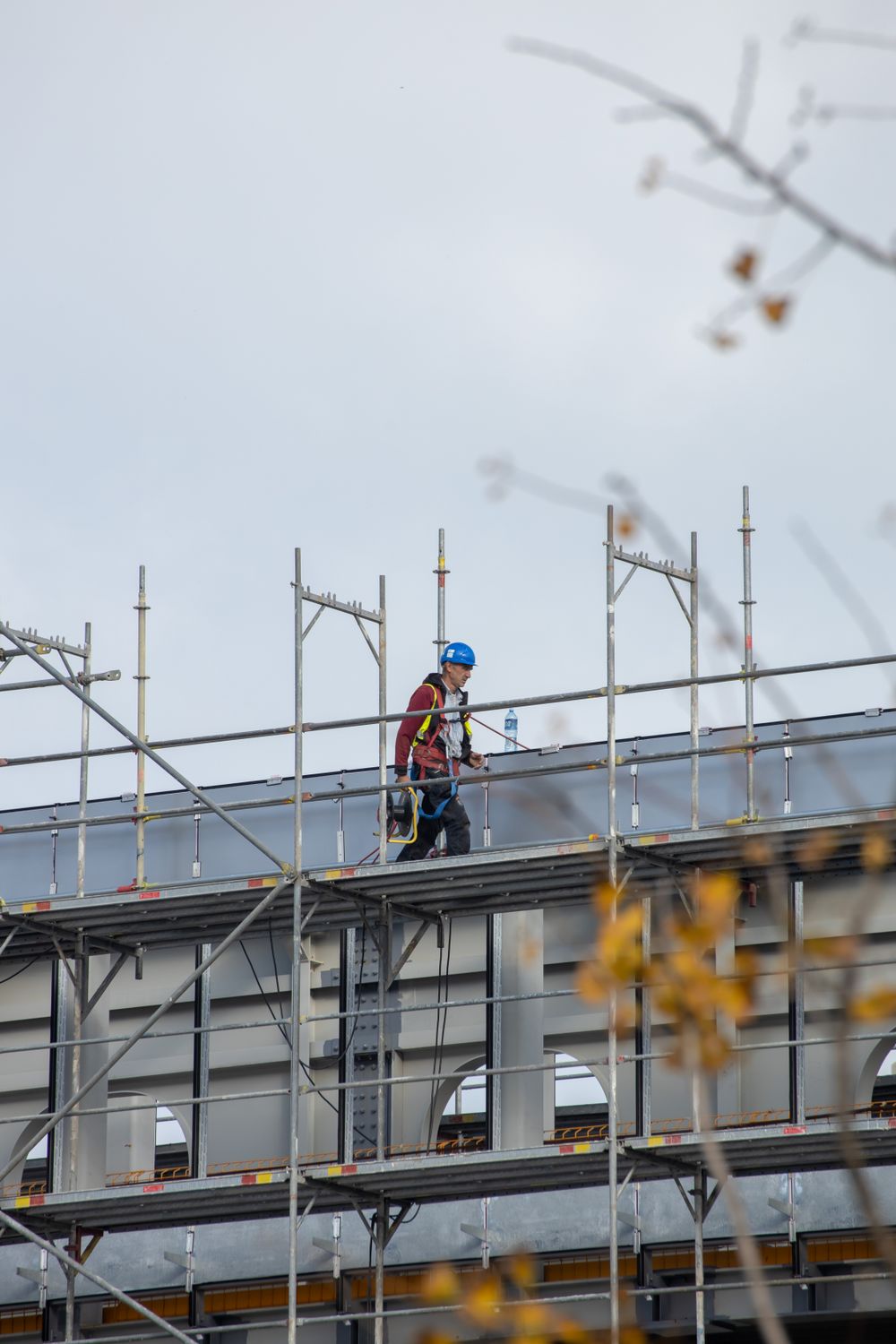
Work at Height Regulations in Ireland: What the Law Requires
If your staff ever climb a ladder, stand on a platform or work near an edge, the law in Ireland places clear duties on you. This article explains the framework in plain language so you know exactly what is expected and how to meet it.
Work at height is one of the most heavily regulated activities in Irish workplaces, and for good reason. The rules are not designed to make jobs harder — they exist because falls cause some of the most severe injuries seen at work. Understanding the structure of the law makes compliance far simpler than it first appears.
The two pillars of the law
Work at height in Ireland sits on two main legal foundations. The first is the Safety, Health and Welfare at Work Act 2005the overarching statute that places a general duty on every employer to ensure, so far as is reasonably practicable, the safety, health and welfare of employees. It also requires employees to take reasonable care of themselves and others.
The second, and more specific, is the Safety, Health and Welfare at Work (General Application) Regulations 2007. Within these regulations, Part 4 deals directly with Work at Height. This is the part you will refer to most often when planning the practical detail of a job. It sets out how work at height should be organised, the equipment that may be used and the precautions that must be in place.
The 2005 Act tells you that you must keep people safe; Part 4 of the 2007 Regulations tells you how that applies specifically to working at height.
What Part 4 expects of employers
Part 4 follows a logical hierarchy of control. Rather than prescribing a single method, it requires duty holders to work through a series of priorities, choosing the most protective option that is reasonably practicable:
- Avoid work at height where it is reasonably practicable to do the work safely otherwise.
- Prevent falls by using an existing safe place of work or suitable work equipment, such as guard rails and stable platforms.
- Mitigate the distance and consequences of a fall where the risk cannot be eliminated, for example with nets or fall-arrest systems.
The regulations also require that work at height is properly planned, appropriately supervised and carried out in a manner that is safe so far as is reasonably practicable. Planning must include the selection of work equipment and arrangements for emergencies and rescue.
Equipment, inspection and conditions
Part 4 sets standards for the equipment used to work at height — ladders, scaffolds, working platforms and so on — including requirements for stability, strength and suitability for the load. It addresses the dangers of fragile surfaces and falling objects, and requires that work at height does not go ahead in weather conditions that would endanger health or safety.
Equipment that could degrade, such as ladders and certain platforms, must be inspected at suitable intervals and after any event that might affect its safety. Keeping simple inspection records is one of the easiest ways to demonstrate compliance if you are ever asked.
⭐ Key takeaways
- The 2005 Act sets the general duty to keep workers safe.
- Part 4 of the General Application Regulations 2007 covers work at height specifically.
- Follow the hierarchy: avoid, prevent, then mitigate falls.
- Plan, supervise and risk-assess every task, including rescue.
- Inspect equipment and keep records; train everyone involved.
The role of the Health and Safety Authority
The Health and Safety Authority (HSA)is the national body responsible for enforcing this legislation. HSA inspectors can visit workplaces, issue improvement and prohibition notices, and where necessary pursue prosecutions. They also publish guidance to help employers interpret the regulations. Engaging with that guidance early is far cheaper than dealing with an enforcement notice later.
Training as a legal expectation
Both the Act and the regulations rest on the concept of competence. You cannot reasonably expect someone to work at height safely if they have never been taught the hazards or how to use the equipment. Providing instruction, training and supervision is therefore not a nice-to-have — it is woven through the legal duties. A structured course gives your team that grounding and gives you a record that the training took place. Our practical working at heights guide shows how these duties translate into everyday site decisions.
Working at Heights training from €35
Self-paced, HSA-aligned, certificate the same day — €35 per person.
Putting compliance into practice
Meeting the regulations is mostly about routine: assess each job, choose the safest reasonably practicable method, use sound equipment, supervise the work and keep your people trained. Done consistently, these habits satisfy both the 2005 Act and Part 4 without drama. For the specific controls that stop falls before they start, see our guide to preventing falls from height.
Regulation can feel daunting on paper, but in practice it simply codifies good sense. Plan the work, protect the worker and prove you did both. A competent, certified team makes every one of those steps easier.